 24 X 7 online support
  Contact Us Free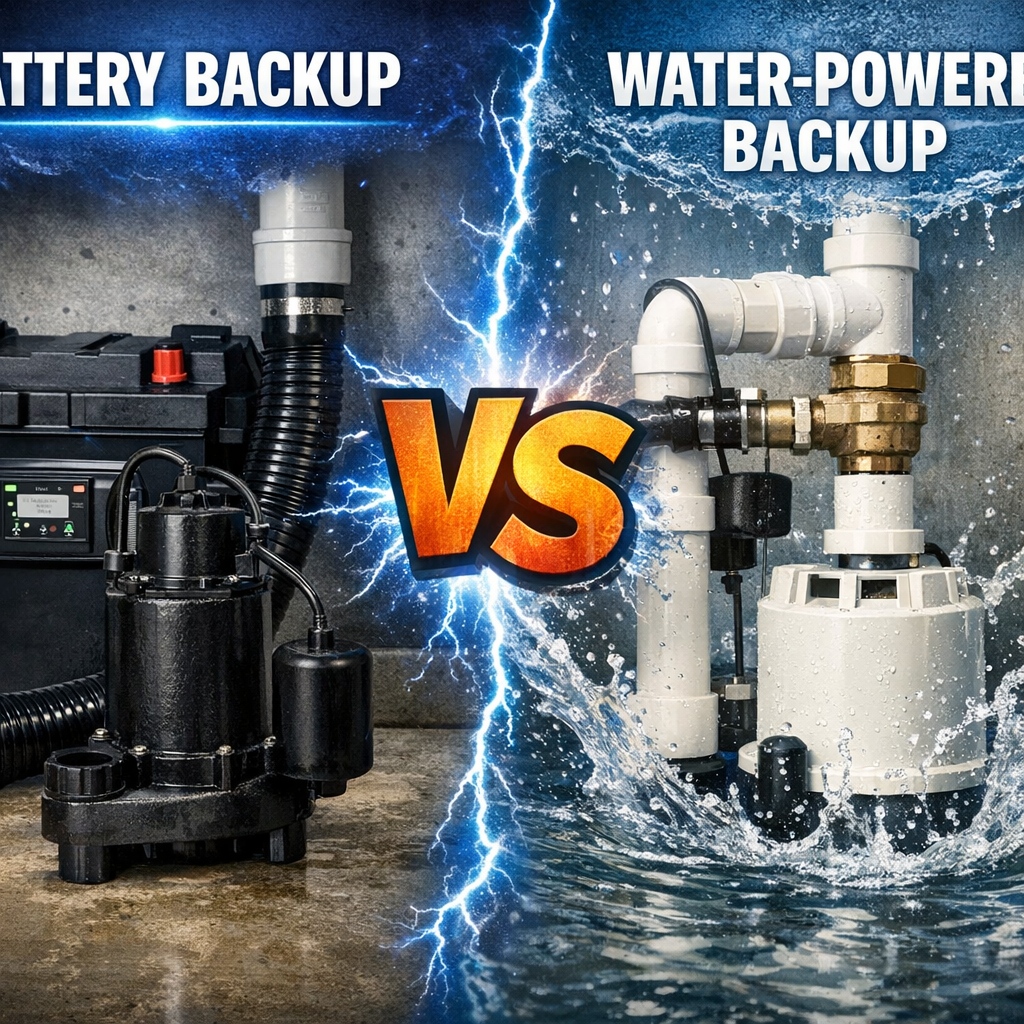
Battery Backup vs. Water-Powered Backup Sump Pump: Which Is Better? 2025
Battery backup sump pumps use deep cycle batteries to power a DC pump during power outages, whereas water-powered backup sump pumps operate using municipal water supply pressure through the venturi effect. Battery systems offer 4-8 hours of runtime and pump 1,800-3,600 gallons per hour, while water-powered systems provide unlimited runtime during power failures but require adequate water pressure (40+ PSI) and increase water bills by $200-400 annually. According to the National Electric Code, battery backup systems are more common for homes with finished basements, whereas water-powered systems excel in areas with reliable municipal water and frequent extended outages.
How Does Each Backup Sump System Work?
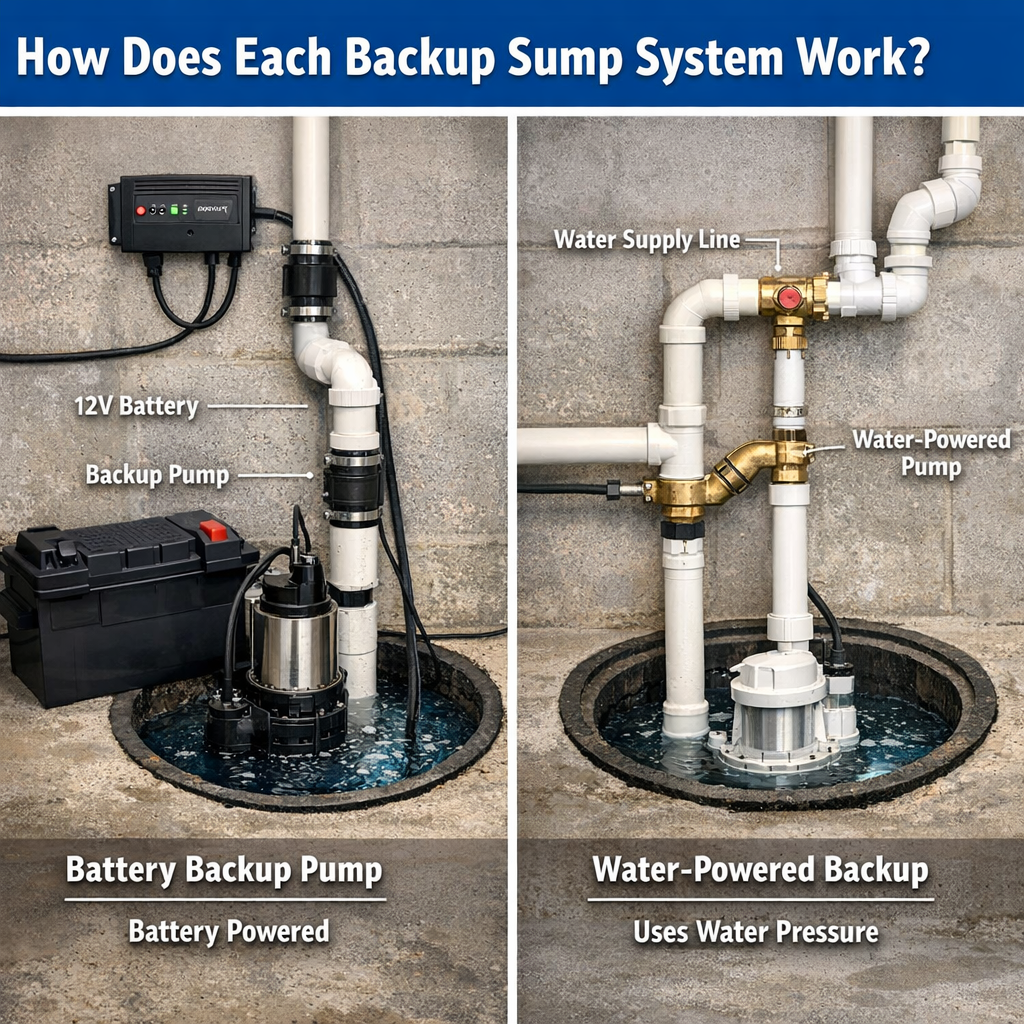
A battery backup sump pump connects to a marine battery or deep cycle battery that maintains charge through an automatic battery charger. When the primary sump pump fails due to power outage or mechanical failure, the float switch activates the DC pump, which draws water from the sump basin through the discharge pipe. This emergency backup system operates independently of electrical power, providing flood prevention during storms that typically cause power failures.
A water-powered backup sump pump connects directly to the municipal water supply through your home’s plumbing system. When water enters the sump pit and the primary AC pump fails, the float switch opens a valve that releases pressurized city water through a venturi pump system. This creates hydraulic pressure that pulls groundwater from the sump basin and ejects it through the drainage system. The water-activated pump requires no electricity and operates as a mechanical backup pump using the pressure-driven pump principle.
Backup Sump Pump Comparison: Key Performance Metrics
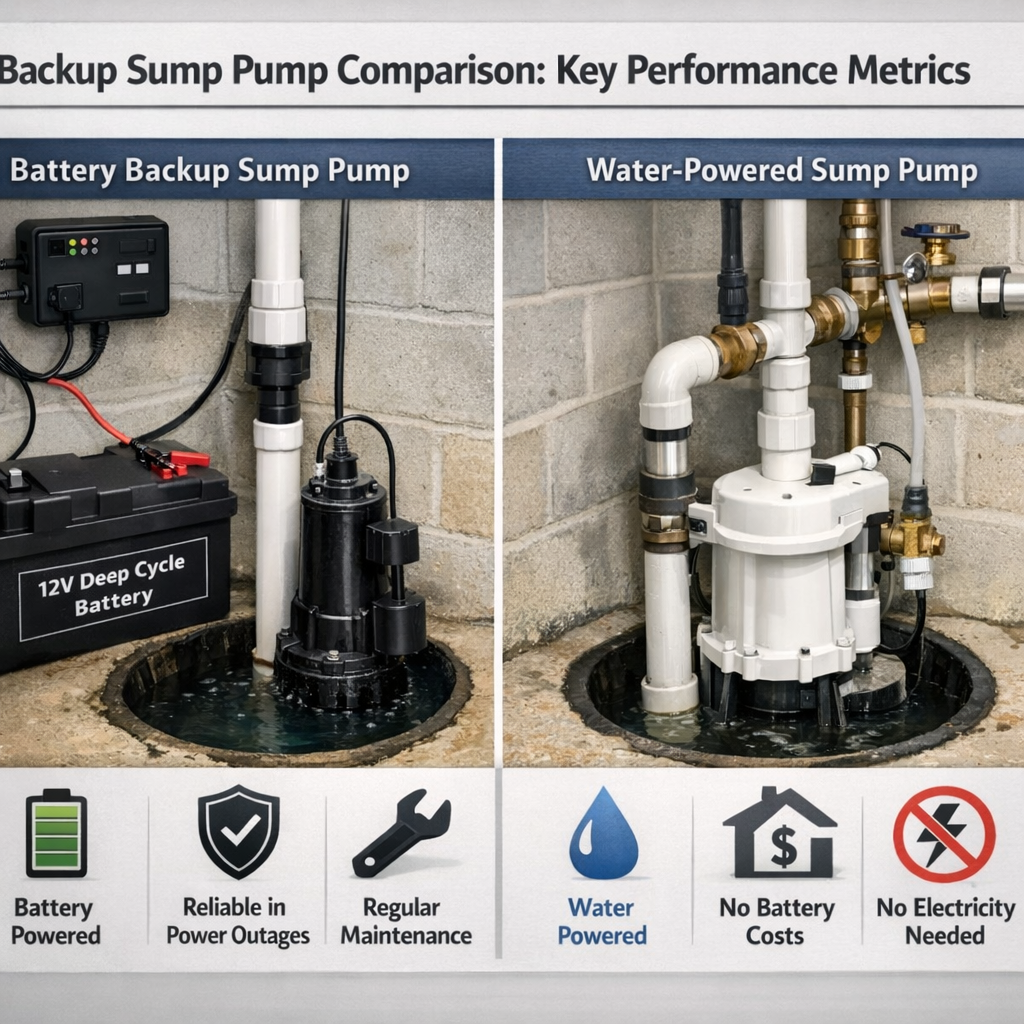
| Feature | Battery Backup Sump Pump | Water-Powered Backup Sump Pump |
|---|---|---|
| Pumping Rate | 1,800-3,600 GPM (45-90 GPM) | 800-1,600 GPM (20-40 GPM) |
| Runtime Capacity | 4-8 hours (finite battery life) | Unlimited (continuous duty pump) |
| Installation Cost | $500-900 | $300-600 |
| Operating Cost | $50-100/year (battery replacement) | $200-400/year (water usage cost) |
| Maintenance Requirements | Battery testing every 3 months | Maintenance free pump (annual check valve inspection) |
| Power Source | Battery operated pump (electric independence) | Municipal water backup (municipal dependency) |
| Discharge Capacity | High flow pump (3,600 gallons/hour max) | Low flow pump (1,600 gallons/hour max) |
Which Backup Pump Performs Better During Power Outages?
Battery backup systems excel in short-duration power failures lasting 2-6 hours, providing high capacity pump performance with pumping rates that match 50-70% of primary sump pump capacity. The battery-powered pump delivers sustained operation until the deep cycle battery depletes, typically after pumping 7,000-15,000 gallons depending on amp hours rating. This makes them ideal for basement flood prevention during typical storm-related outages where power restoration occurs within several hours.
Water-powered backup pumps provide unlimited runtime capacity during extended power outages, making them superior for emergency preparedness in areas experiencing multi-day power failures. The water-driven pump operates continuously as long as municipal water supply remains available and water pressure stays above 40 PSI. However, the pumping velocity is 40-60% lower than battery systems, which can become problematic during heavy rain events with rapid water intrusion. For more information about pump mechanisms and performance differences, see what is the difference between a centrifugal and positive displacement pump.
Installation Requirements and Code Compliance
Battery backup sump pump installation requires connecting the inverter and battery charger to a dedicated electrical circuit per National Electric Code standards. The submersible pump or pedestal pump mounts in the sump basin with a separate discharge pipe to prevent backflow into the primary pump line. Installation typically takes 2-4 hours and requires basic electrical knowledge for proper wiring of the automatic pump engagement system.
Water-powered backup sump pump installation requires connection to cold water plumbing (typically 3/4-inch line) and must comply with local plumbing code requirements. Many jurisdictions require backflow prevention devices and specific check valve configurations to protect municipal water from contamination. The hydraulic sump pump connects to the foundation waterproofing system through dedicated discharge lines, and installation usually takes 1-3 hours with basic plumbing skills.
Cost Analysis: Upfront vs. Long-Term Operating Expenses
The cost effective backup solution depends on usage frequency and local utility rates. Battery systems require $500-900 upfront plus $50-100 annually for battery replacement every 3-5 years (deep cycle marine batteries cost $150-250). Total 10-year cost: $1,500-2,400. Energy consumption during charging adds negligible electrical costs ($5-10/year).
Water-powered systems cost $300-600 installed but consume 1 gallon of municipal water for every gallon pumped, creating ongoing operational expense. During a typical 6-hour pumping event removing 5,000 gallons, the system uses 5,000 gallons of city water (costing $20-40 depending on water bill rates). Homes experiencing 5-10 activation events annually face $200-400 in additional water usage cost. Total 10-year cost: $2,300-4,600, making them the most cost-effective backup sump pump solution only in areas with very infrequent use or low water rates.
Use-Case Scenarios: Which System Fits Your Situation?
Scenario 1: Urban Home with Finished Basement
Battery backup sump pumps are superior for finished basements where basement waterproofing investments are high. The higher GPM performance (45-90 gallons per minute) provides faster water evacuation system response, and the absence of municipal water discharge eliminates concerns about water conservation during drought restrictions. The automatic backup activation provides reliable basement protection without ongoing water costs.
Scenario 2: Rural Property with Well Water
Water-powered backup pumps are incompatible with well water systems because they require continuous municipal water supply. Rural homeowners must choose battery backup sump pump systems or generator-powered solutions. The battery operated pump provides electric independence critical in rural areas experiencing longer power restoration times after storms.
Scenario 3: High Water Table with Frequent Seasonal Flooding
Water-powered systems excel when continuous pumping capacity is essential. Homes with high groundwater levels and water table fluctuation during spring thaw may require pumping for 24-48 continuous hours. Battery systems cannot provide sustained operation beyond 4-8 hours without recharge requirements, whereas water-powered systems deliver unlimited runtime as a self-powered system drawing from city infrastructure.
Scenario 4: Moderate Climate with Occasional Storms
Battery systems are the most reliable backup sump pump system for typical applications with 2-5 annual activation events lasting under 6 hours. The higher pumping efficiency and operational reliability provide excellent flood control device performance without the ongoing expense of water usage. This represents the optimal backup sump pump for basement flooding prevention in standard residential applications.
Combination Backup System: Dual Protection Strategy
A combination battery and water-powered backup system provides layered defense against basement flooding. The dual sump pump configuration uses the battery-powered pump as the primary backup (faster pumping rate, no water cost) with the water-powered system as the secondary pump system for extended outages exceeding battery capacity. This dual protection approach costs $800-1,500 installed but eliminates single-point failure risks. The pump redundancy ensures flood mitigation even if one backup fails, making this the most comprehensive emergency drainage solution for homes in flood-prone areas or with high-value finished basements.
Decision Framework: Choosing the Right Backup Pump
Choose a battery backup sump pump if: You experience power outages lasting under 8 hours, need high gallons per hour pumping capacity, have a finished basement requiring rapid water removal, want to avoid ongoing operating costs, or live in areas with water conservation restrictions.
Choose a water-powered backup sump pump if: You experience extended power outages exceeding 12 hours, have reliable municipal water with 40+ PSI pressure, prioritize unlimited runtime over pumping velocity, can absorb $200-400 annual water bill increases, or need a maintenance-free pump solution.
Choose a dual pump system if: Your home has extensive basement waterproofing investments, you live in areas with severe seasonal flooding, require fail-safe pump operation, or need continuous operation capability with high-capacity pump performance backup.
For comprehensive guidance on selecting the optimal battery vs water backup sump pump configuration for your specific situation, consider consulting with drainage system professionals who can assess your water table, foundation waterproofing needs, and local plumbing code requirements.