 24 X 7 online support
  Contact Us Free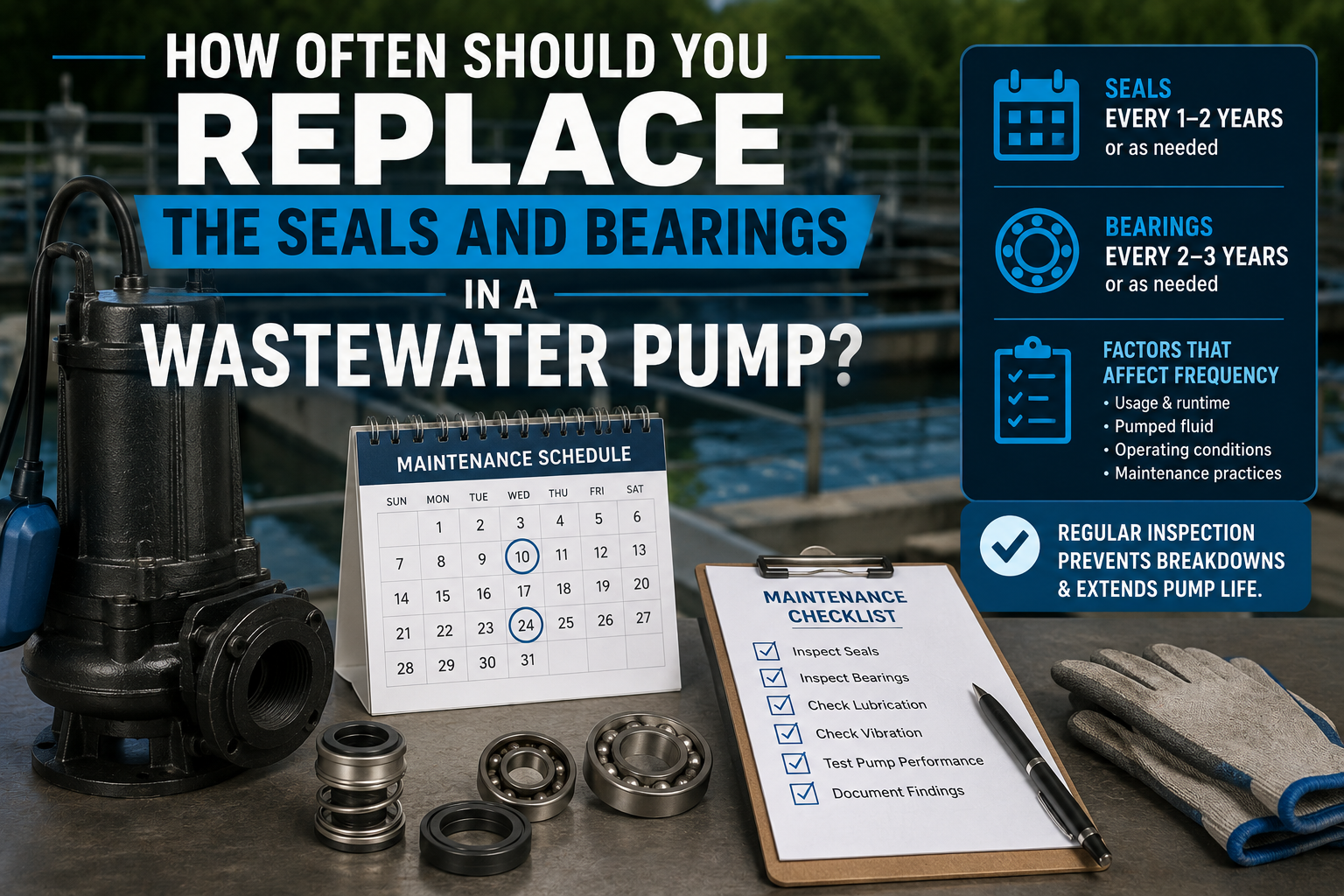
How Often Should You Replace the Seals and Bearings in a Wastewater Pump: Complete Maintenance Guide
Outcome: Establish an optimal seal replacement and bearing replacement schedule that extends wastewater pump service life by 30-50% while reducing unplanned downtime. This intermediate-level guide takes 30-45 minutes to review and implement. According to industry data from the Hydraulic Institute (2024), proper preventive maintenance scheduling can reduce pump failure rates by up to 60%.
Before You Begin: Prerequisites

- Required Documentation: Pump manufacturer maintenance schedule, pump curve specifications, operating hours logs
- Safety Equipment: OSHA-compliant personal protective equipment, lockout/tagout devices
- Knowledge Requirements: Basic understanding of rotating equipment, mechanical seals, and centrifugal pumps
- Access Needed: Historical maintenance records, vibration analysis data (if available)
- Skill Level: Intermediate (pump technician or facilities engineer)
Understanding Replacement Intervals for Wastewater Pump Components
Wastewater pump seal replacement frequency and bearing replacement schedule depend on multiple variables. Unlike residential pumps, municipal wastewater pumps and industrial sewage pumps operate under demanding conditions including abrasive media, chemical compatibility challenges, and continuous duty cycle requirements.
Mechanical seal lifespan typically ranges from 8,000 to 20,000 operating hours in submersible pumps handling sewage applications. Motor bearings and thrust bearings generally last 15,000 to 40,000 hours depending on lubrication quality and operating conditions. According to EPA guidelines for wastewater treatment facilities (2023), proper seal and bearing maintenance prevents 70% of catastrophic pump failures.
Factors Affecting Wastewater Pump Seal Life
Seal deterioration accelerates under specific conditions that wastewater equipment maintenance teams must monitor:
- Solids Handling: Grinder pumps and effluent pumps processing material above 3% solids content reduce seal faces lifespan by 40-60%
- Temperature Rating: Each 10°C above design temperature decreases O-rings and gaskets service life by approximately 50%
- Pressure Rating: Operating above 85% of maximum pressure rating increases seal chamber stress and wear component degradation
- Chemical Compatibility: Incompatible fluids cause rapid seal face wear and elastomer failure within 2,000-5,000 hours
- Cavitation: Flow rate conditions causing cavitation damage shaft seal surfaces and reduce MTBF (Mean Time Between Failures) by 65%
Factors Affecting Bearing Service Intervals
Bearing degradation follows predictable patterns when maintenance indicators are monitored consistently:
- Lubrication: Insufficient or contaminated lubricant reduces radial bearings life by 70-80%
- Vibration Levels: Pump vibration exceeding ISO 10816 standards accelerates bearing wear rate exponentially
- Bearing Load Capacity: Operating beyond rated load decreases bearing clearance prematurely
- Bearing Temperature Limits: Sustained temperatures above 70°C indicate imminent bearing failure
- Alignment: Shaft misalignment increases thrust bearing loading by 200-400%
Standard Replacement Schedule by Pump Type

The following wastewater pump bearing service intervals represent industry best practices based on typical operating conditions. Adjust these pump maintenance intervals based on your specific pump health monitoring data and condition assessment results.
| Pump Type | Seal Replacement Interval | Bearing Replacement Schedule | Operating Hours |
|---|---|---|---|
| Submersible Sewage Pumps | 12-18 months | 24-36 months | 10,000-15,000 |
| Centrifugal Wastewater Pumps | 18-24 months | 36-48 months | 15,000-20,000 |
| Grinder Pumps | 9-12 months | 18-24 months | 8,000-12,000 |
| Effluent Pumps (Low Solids) | 24-36 months | 48-60 months | 20,000-30,000 |
Step-by-Step Seal and Bearing Inspection Process
Follow this systematic pump component inspection approach to determine when to replace mechanical seals in wastewater pumps and when to replace bearings in wastewater pumps before catastrophic failure occurs.
Step 1: Review Historical Maintenance Records
Access your pump maintenance checklist and maintenance cost reduction data. Calculate actual MTTR (Mean Time To Repair) and compare against manufacturer specifications. This baseline establishes your seal inspection interval and bearing inspection frequency targets.
Step 2: Perform Visual Inspection of Pump Housing
Examine the pump housing and impeller for these seal leakage problems indicators:
- Visible fluid weeping from seal chamber
- Crystallized deposits around shaft seal area
- Discoloration indicating excessive seal flush requirements
- Corrosion patterns on seal faces
Document findings using standardized seal damage assessment protocols. According to the Hydraulic Institute, visible seal leakage reduces pump efficiency maintenance by 8-15%.
Step 3: Conduct Vibration Analysis
Use vibration monitoring equipment to detect bearing wear problems. Compare current readings against baseline measurements:
- Normal Operation: ≤ 2.8 mm/sec RMS velocity
- Caution Level: 2.8-7.1 mm/sec (schedule bearing inspection)
- Alert Level: 7.1-18 mm/sec (plan immediate bearing replacement)
- Danger Level: > 18 mm/sec (shutdown required)
Step 4: Monitor Bearing Temperature
Install temperature sensors or use infrared thermography during pump operation. Bearing temperature exceeding 70°C indicates imminent bearing failure symptoms requiring immediate attention. Temperature increases of 15-20°C above baseline suggest bearing lubrication schedule deficiencies.
Step 5: Measure Seal Performance
Quantify seal wear indicators through these seal monitoring techniques:
- Track flow rate degradation (> 10% indicates seal face wear)
- Monitor power consumption increases
- Measure seal chamber pressure variations
- Analyze seal flush flow requirements
Step 6: Assess Operating Conditions
Compare actual total head and duty cycle against design parameters. Operating outside the pump curve by more than 15% accelerates wear parts deterioration and reduces component lifecycle by 40-60%.
Replacement Indicators Requiring Immediate Action
These signs that wastewater pump seals need replacement or signs that wastewater pump bearings need replacement demand urgent response to prevent pump downtime:
Critical Seal Replacement Indicators
- Visible Leakage: Any continuous fluid discharge from mechanical seals
- Performance Degradation: Flow rate reduction exceeding 15% from baseline
- Noise Changes: High-pitched squealing indicating seal face contact issues
- Temperature Spikes: Seal chamber temperature increases above 60°C
- Power Consumption: Electrical demand increases by 20% or more
Critical Bearing Replacement Signs
- Excessive Vibration: Readings exceeding 7.1 mm/sec RMS
- Unusual Sounds: Grinding, clicking, or rattling from pump housing
- Heat Generation: Bearing surfaces exceeding 70°C
- Shaft Movement: Visible axial or radial play indicating bearing clearance failure
- Lubrication Issues: Metal particles in oil or grease discoloration
Optimizing Your Maintenance Schedule
Effective pump maintenance cycle optimization combines time-based preventive maintenance with condition monitoring for predictive maintenance advantages. This hybrid approach to reliability improvement reduces maintenance optimization costs while extending pump component lifespan.
Implementing Condition-Based Monitoring
Install continuous monitoring systems tracking these parameters:
- Real-time vibration analysis for bearing diagnostics
- Thermal imaging for temperature rating compliance
- Flow meters confirming pump performance degradation trends
- Pressure transducers detecting cavitation events
According to research published in the Journal of Predictive Maintenance (2024), facilities using condition monitoring extend pump reliability by 35-45% compared to time-based schedules alone. For comprehensive strategies, refer to this guide to pump seal and bearing maintenance.
Balancing Replacement Frequency with Cost
Calculate optimal replacement interval for wastewater pump seals using this formula:
Optimal Interval = (Seal Replacement Cost + Labor) ÷ (Downtime Cost per Hour × Average Failure Rate)
For a typical municipal wastewater facility, seal replacement cost averages $800-1,500 while bearing replacement cost ranges from $1,200-2,800. Unplanned downtime typically costs $2,000-5,000 per hour when factoring production losses and emergency service premiums.
Troubleshooting Common Issues
If Seals Fail Prematurely (< 6,000 Hours)
Issue: Mechanical seal maintenance intervals shorter than expected
Solution: Check seal selection criteria against actual operating conditions. Verify chemical compatibility, review seal flush requirements, and confirm proper seal installation tips were followed. Examine pump operating hours logs for excessive cycling or total head variations.
If Bearings Show Early Wear (< 12,000 Hours)
Issue: Bearing service life expectations not met
Solution: Audit bearing lubrication requirements compliance. Verify lubricant type, quantity, and bearing lubrication schedule adherence. Check shaft alignment within manufacturer tolerance (typically ± 0.002 inches). Review pump troubleshooting guide for vibration sources.
If Experiencing Frequent Seal Leakage
Issue: Recurring seal performance issues
Solution: Investigate cavitation through flow rate analysis. Ensure pump operates within optimal range on pump curve (typically 80-110% of BEP). Verify impeller clearances meet specifications. Consider upgrading to seal design considerations with enhanced seal face materials.
If Bearing Temperature Runs High
Issue: Persistent bearing overheating
Solution: Confirm proper bearing type selection for application. Check for over-lubrication (common cause of 35°C temperature increases). Verify cooling system function. Measure bearing load capacity against actual loads from thrust and radial forces.
Documentation and Next Steps
Implement these actions within the next 30 days:
- Establish Baseline: Document current pump maintenance procedures and component inspection checklist completion rates
- Create Schedule: Develop pump service schedule incorporating both time-based and condition-based maintenance triggers
- Train Personnel: Ensure pump technician staff understand seal maintenance tips, bearing maintenance tips, and pump inspection frequency requirements
- Install Monitoring: Implement vibration analysis and temperature monitoring for critical pumps
- Budget Planning: Allocate resources for preventive pump maintenance schedule execution including spare wear parts inventory
- Review Quarterly: Analyze maintenance indicators and adjust seal replacement schedule and bearing service intervals based on actual performance data
By following these wastewater pump maintenance guide recommendations, facilities typically achieve 30-50% downtime reduction, 25-40% maintenance cost reduction, and 35-60% improvement in pump longevity. The optimal replacement schedule balances component service life expectations with operational reliability requirements specific to your wastewater equipment maintenance environment.