 24 X 7 online support
  Contact Us Free
How to Troubleshoot Common Wastewater Pump Alarms and What Each One Means
You’re Experiencing This If…

You hear an audible alarm, see a red alarm light on your control panel, or notice a flashing light near your septic system or lift station. Your wastewater pump alarm system activates when the pump station detects abnormal conditions requiring immediate attention. According to the National Association of Wastewater Technicians (2023), approximately 73% of residential pump alarms indicate high water level conditions caused by pump failure or excessive water usage.
Common alarm scenarios include a wastewater pump alarm won’t stop beeping after heavy rain, a grinder pump alarm light flashing red in the middle of the night, or a sewage pump alarm sounds but pump is running normally. Each alarm type signals a specific condition requiring different diagnostic approaches.
Quick Solution: Most Likely Fix

For high water alarm on sewage pump systems (the most common alarm), immediately reduce water usage and check if the pump is running. Press the alarm silence button to temporarily stop the beeping noise while maintaining the visual alarm indicator. Verify power supply to the GFCI outlet and circuit breaker. Wait 30-60 minutes while avoiding toilet flushing, laundry, and dishwashing. If the basin level drops and the alarm clears, your effluent pump is functioning but was temporarily overwhelmed.
If the alarm persists after reducing water usage, the sewage pump likely requires immediate attention from a maintenance technician or plumber. Never ignore a constant alarm lasting more than two hours, as this indicates pump malfunction indicators requiring professional sewage ejector troubleshooting.
Understanding Wastewater Pump Alarm Types and Meanings
Visual Alarm Indicators on the Alarm Panel
Modern pump controller systems use standardized color codes. A steady red light indicates high level warning—the sump pit water level exceeded the alarm float switch position. A green status light confirms normal operation with adequate power supply. An amber warning light signals maintenance alerts or minor system fault identification issues not requiring immediate emergency response to sewage pump alarm conditions.
A flashing light pattern provides additional diagnostic information. Intermittent alarm signals often indicate float switch stuck conditions or sensor probe malfunctions. Different pump alarm sounds and meanings include continuous beeping for critical high water conditions, intermittent beeping for power restoration after outage, and rapid beeping for motor overheating or thermal trip conditions.
Audible Warning Signal Patterns
| Alarm Sound Pattern | Meaning | Urgency Level |
|---|---|---|
| Continuous beeping pump alarm | High water level alarm – basin nearly full | Critical – Reduce water use immediately |
| Intermittent beeping (every 30 seconds) | Power failure alarm or backup battery activation | Moderate – Check electrical circuit |
| Rapid beeping (3 beeps per second) | Pump motor failure or thermal overload | Critical – Pump not operating |
| Single beep then silence | Alarm reset procedure completed successfully | Low – System acknowledging reset |
Why Is This Happening? Diagnostic Framework
Wastewater system maintenance experts identify five primary causes for pump alarm activation. Understanding these causes enables accurate diagnostic testing and appropriate alarm troubleshooting steps.
Primary Diagnostic Criteria
High Water Level Conditions: The float switch or level sensor detects water above the alarm threshold. This occurs when water inflow exceeds pump capacity, the submersible pump fails to activate, or the discharge pipe experiences blockage. According to Zoeller (2024), high water accounts for 68% of all residential wastewater pump alarms.
Electrical Fault Detection: Loss of voltage, phase loss, or voltage imbalance prevents pump motor operation. GFCI tripped conditions, breaker tripped status, or fuse blown scenarios interrupt power to the pump while maintaining alarm circuit power through backup battery systems.
Mechanical Pump Failure: The impeller becomes jammed, bearings fail, or seal leakage occurs. Pump won’t start conditions despite proper electrical supply indicate motor or capacitor failure. Pump runs but alarm still on scenarios suggest reduced flow or no flow condition from mechanical issues.
Control System Malfunction: Float switch malfunction, pressure switch issue, or relay failure prevents proper pump cycling. The pump control panel may show communication failure or telemetry error on SCADA-equipped lift station systems.
Check Valve Problems: Check valve failure allows backflow, causing the basin to refill after pump shutdown. This creates short cycling or pump cycling issues with frequent starts and continuous running patterns.
Solution #1: High Water Alarm Troubleshooting (Most Common)
High level warning alarms represent 7 out of 10 alarm activations. Follow this step by step pump alarm diagnosis for wastewater pump high level alarm troubleshooting:
- Reduce Water Usage: Stop all water-using activities including toilet flushing, showers, laundry, and dishwashing. This prevents further basin filling while diagnosing the issue.
- Verify Pump Operation: Listen for pump motor sound from the sump pit or basin. A running pump suggests excessive inflow or reduced pumping capacity. A silent pump indicates pump failure indicator conditions requiring immediate attention.
- Check Visual Indicators: Observe the warning light status on the control panel. A red alarm light with pump running suggests the pump cannot keep pace with inflow or experiences discharge problems.
- Test Float Switch: After ensuring power is off, manually lift the float switch to verify free movement. A float switch stuck in the up position prevents pump deactivation, while a stuck down position prevents activation. Testing pump circuit breaker for alarm simultaneously verifies electrical continuity.
- Inspect Discharge Pipe: Check for frozen discharge lines (winter), crushed pipes, or closed valves preventing proper effluent system discharge. Listen for water flowing through the discharge pipe when the pump runs.
- Monitor Basin Level: If the pump operates correctly, the water level should drop within 15-30 minutes. Wastewater pump runs but alarm still on scenarios clear once water drops below the alarm float switch position.
Wastewater pump alarm after heavy rain events often indicates groundwater infiltration into the septic system or private septic tank, overwhelming pump capacity during wet weather conditions.
Solution #2: Power Failure and Electrical Problems
Power loss alarm conditions require systematic electrical troubleshooting. According to Liberty Pumps (2023), electrical issues cause 18% of all pump alarm activations.
Checking Electrical Circuit Components
Begin with the circuit breaker at your main electrical panel. A breaker tripped to the middle or off position indicates overcurrent condition or potential pump motor failure. Reset the breaker once. If it immediately trips again, the pump or wiring has an electrical fault requiring professional diagnosis.
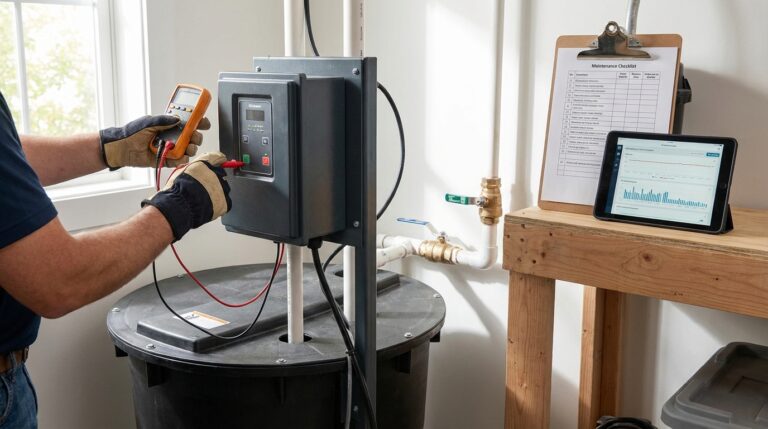
GFCI outlet testing prevents misdiagnosis. Press the test button on the GFCI outlet serving the pump station—it should click and cut power. Press reset to restore power. A GFCI tripped without obvious cause may indicate moisture detection or ground fault in the pump wiring. According to the National Electrical Code (2023), pumps in wet locations require GFCI protection.
Use a voltage meter or multimeter to verify proper voltage at the pump. Submersible pump systems require 230V or 115V depending on pump manufacturer specifications. Undercurrent condition readings suggest loose connections, while no power readings indicate wiring breaks or panel problems.
Backup Battery System Indicators
Systems with backup battery activation provide temporary pumping during power outages. An amber warning light or intermittent beeping indicates battery operation. The pump alarm meaning differs from standard high water alarms—the system functions but requires power restoration within the battery’s 4-8 hour capacity (Myers, 2024).
Solution #3: Float Switch and Sensor Malfunctions
Float switch malfunction represents a common but easily correctable issue. The level switch problem occurs when debris interferes with switch movement, wiring corrodes, or the switch mechanism fails.
Diagnosing Float Switch Problems
Checking float switch on sewage pump systems requires understanding the typical configuration: Most effluent pump installations use two or three float switches. The lowest switch (pump-on float) activates the pump. The middle float (pump-off float) deactivates the pump. The highest switch (alarm float) triggers the high water alarm.
Why does my pump alarm activate at night? Float switch testing often reveals switches tangled around pipes or debris causing false signals. Sensor error conditions occur when probe malfunction in electronic level sensor systems provides incorrect level readings to the pump controller.
According to Goulds pumps technical specifications (2023), tethered float switches require 12-18 inches of horizontal movement to operate correctly. Restricted movement from debris or tangling prevents proper level adjustment and causes false alarms.
Solution #4: Pump Motor and Impeller Failures
Pump failure versus motor failure alarm diagnosis requires understanding mechanical indicators. A pump won’t stop condition despite low water suggests pressure switch malfunction or stuck relay. Pump won’t start scenarios indicate motor overheating, thermal cutoff activation, or capacitor failure.
Common Pump Performance Issues
Cavitation produces distinctive vibration problems and bearing noise—the impeller cannot move water efficiently due to air entrainment or insufficient submergence. Air lock conditions prevent priming issues resolution, requiring pump controller adjustment or basin modifications.
Seal failure alarm indicators include motor failure symptoms combined with moisture detection at the motor housing. The thermal overload protection trips repeatedly, producing a thermal trip pattern requiring troubleshooting wastewater pump alarms for proper seal and bearing inspection.
Reduced flow despite pump operation suggests partial impeller blockage or wear. No flow condition with pump running indicates complete impeller jam, broken shaft, or severe check valve failure allowing full backflow.
Solution #5: Check Valve and Discharge System Problems
Check valve failure causes distinctive symptoms: The pump cycles frequently (short cycling), runs briefly then stops, or the basin slowly refills after pump shutdown. This continuous running pattern wastes electricity and shortens pump life.
Discharge pipe inspection reveals frozen lines, collapsed pipes, or closed isolation valves. Municipal sewer connection points may experience backups affecting multiple properties. System inspection should verify the discharge pipe slopes continuously upward without sags creating water traps.
Advanced Troubleshooting Techniques
Control Circuit Testing and Sensor Calibration
Advanced grinder pump systems and commercial lift station installations use sophisticated pump controller technology. Telemetry system failures produce communication failure alarms distinct from pump malfunctions. SCADA integration provides network down or signal loss alerts requiring IT and electrical expertise.
Pressure settings verification ensures the pressure switch activates at appropriate levels. Level adjustment on electronic sensor probe systems requires calibration tools and manufacturer specifications. Component repair should only be attempted by qualified maintenance technician personnel.
Understanding Warning Codes and Fault Identification
How to read pump alarm panel displays varies by pump manufacturer. Zoeller, Liberty Pumps, Myers, and Goulds each use proprietary fault code systems. What does steady red light mean on pump panels? Most manufacturers standardize red for critical alarms, amber for warnings, and green for normal status.
How to clear a pump alarm code typically requires pressing the reset button after resolving the underlying condition. Alarm reset button location varies—check the control panel face, inside the panel cover, or on the alarm panel itself. Never repeatedly reset alarms without identifying causes.
Prevention: Routine Maintenance and Monitoring
How to prevent false pump alarms begins with quarterly routine checkup procedures. System fault identification improves through regular alarm monitoring and alert system testing.
Preventive Maintenance Checklist
- Test alarm system monthly by lifting the alarm float switch manually
- Verify backup battery charge quarterly (if equipped)
- Inspect sump pit for debris accumulation every six months
- Exercise the pump during low-water periods to prevent seal drying
- Check discharge pipe for leaks or damage annually
- Schedule professional pump replacement evaluation every 7-10 years
- Document all alarm troubleshooting steps and resolutions
- Install remote notification systems for unoccupied properties
According to the Wastewater Pumping Systems Association (2024), scheduled wastewater system maintenance reduces emergency alarm activations by 64% compared to reactive-only approaches.
When to Call a Professional
Do I need a plumber for pump alarm situations? Yes, if the alarm persists after basic sewage pump alarm troubleshooting checklist completion, electrical issues are suspected, or you’re uncomfortable working with electrical systems or wastewater.
Emergency response to sewage pump alarm is required when the basin approaches overflow (within 6 inches of ground level), sewage backs up into the building, or electrical sparking or burning smells occur. Tampering detection, intrusion alarm, or door open alarm on commercial installations require immediate professional response.
Is it safe to reset pump alarm myself? Yes, for simple high water alarms after identifying the cause and reducing water usage. No, for electrical faults, motor failures, or any situation involving water near electrical components without proper safety procedures.
Conclusion
Understanding different pump alarm sounds and meanings enables rapid diagnosis and appropriate response. Most wastewater pump alarm scenarios involve high water conditions resolvable through water usage reduction and basic troubleshooting. Electrical and mechanical failures require professional intervention to ensure safe, reliable septic pump operation.
Regular alarm system testing, float switch inspection, and preventive maintenance dramatically reduce alarm frequency while extending grinder pump and effluent pump lifespan. Keep this common reasons for pump alarm activation guide accessible for quick reference during alarm events, and never ignore persistent alarms indicating serious wastewater system problems requiring immediate attention.