 24 X 7 online support
 Contact Us Free
Best Sump Pump Replacement Options for Indiana Homeowners: 7 Top Picks
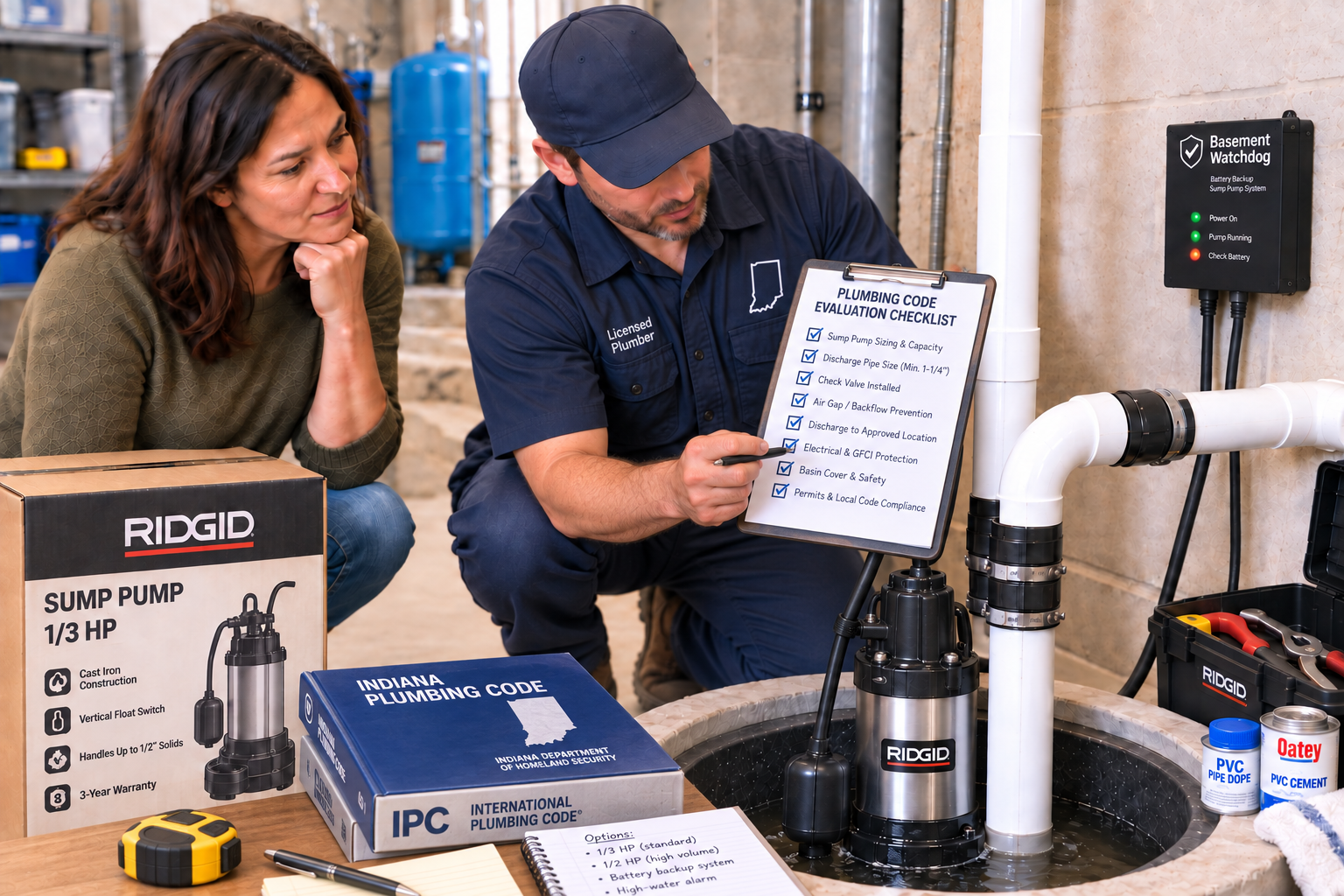
Short answer: Yes, in most cases you need a licensed plumber to replace a sump pump in Indiana if you’re hiring out the work. The Indiana Plumbing Commission requires anyone performing plumbing work for another party to hold a valid plumbing contractor license. Homeowners replacing a sump pump in their own single-family residence may qualify for a limited owner-occupant exemption, but local building department rules and plumbing permit requirements still apply.
Quick Answer: Top Pick and Runner-Up
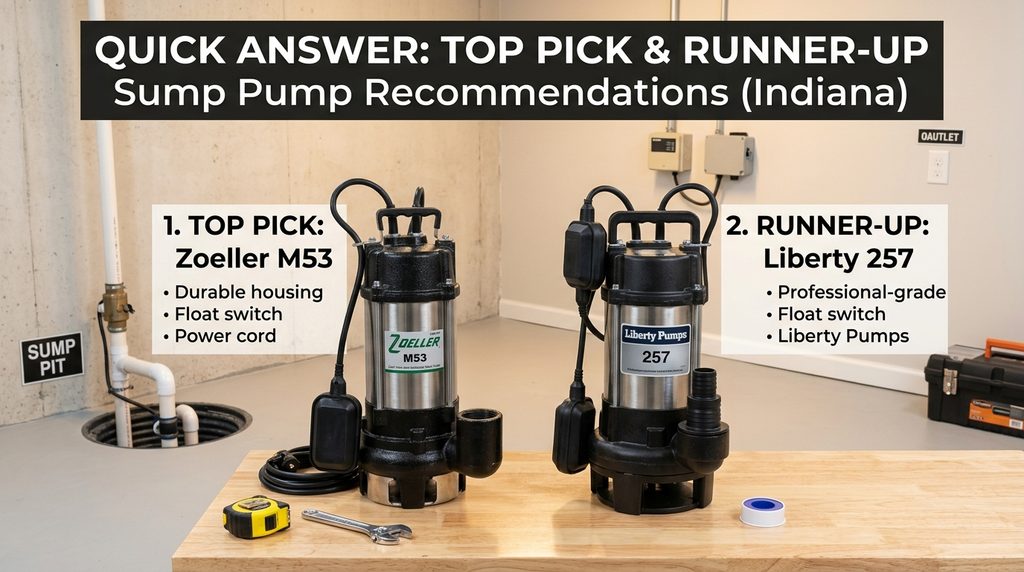
Top Pick — Licensed Plumbing Contractor: Hiring a plumbing contractor licensed by the Indiana Plumbing Commission is the safest, most code-compliant route for sump pump replacement, especially when the job touches the discharge pipe, check valve, or electrical outlet.
Runner-Up — DIY Installation (Owner-Occupant Exemption): A homeowner performing DIY sump pump replacement on their own primary residence may avoid the licensing requirement, but must still follow Indiana plumbing code and may need a plumbing permit from the local building department.
Methodology: How We Evaluated Sump Pump Replacement Options in Indiana
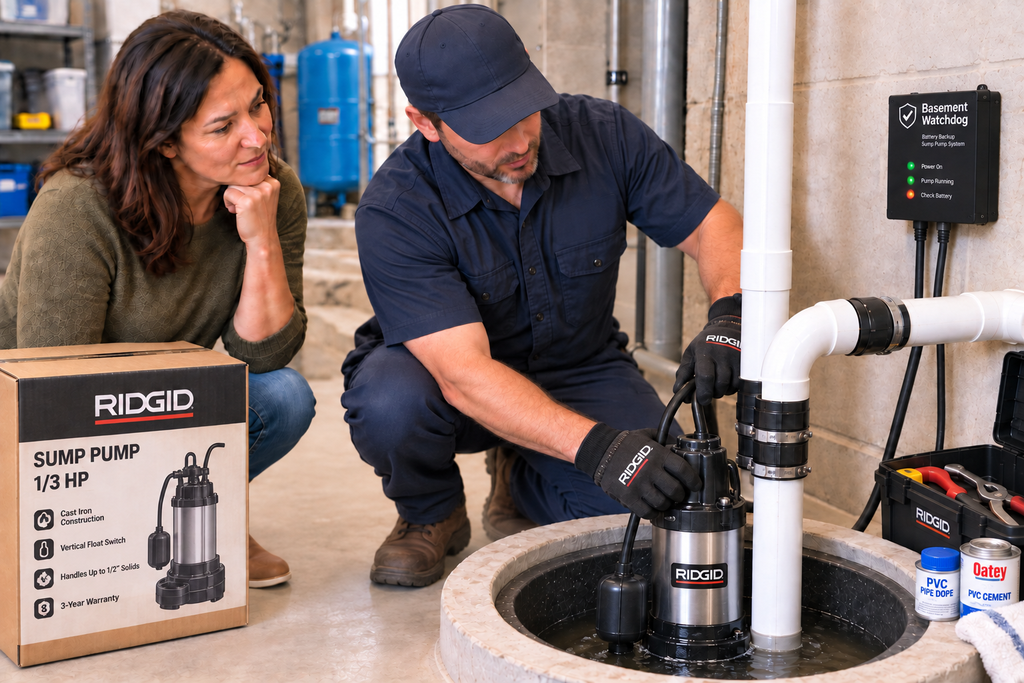
We compared seven common paths Indiana homeowners use for sump pump replacement guide decisions. Each option was scored against five factors:
- Legal compliance: Alignment with Indiana plumbing laws, Indiana Code 25-28.5, and state licensing board rules.
- Code adherence: Consistency with Indiana building codes and the National Plumbing Code.
- Average cost: Total spend including labor, parts, and permit fees.
- Warranty coverage: Manufacturer and workmanship guarantees.
- Water damage prevention performance: Reliability against basement flooding prevention needs.
Quick-Picks Summary
- #1 Licensed Plumbing Contractor — Best overall; full code compliance and warranty.
- #2 Licensed Plumber, Indianapolis — Best for fast permit turnaround in metro areas.
- #3 Licensed Plumber, Fort Wayne — Best for northeast Indiana homeowners.
- #4 DIY Installation — Best for simple like-for-like pump swaps under $400.
- #5 Handyman/Unlicensed Installer — Not recommended; highest compliance risk.
- #6 Battery Backup Sump Pump Installation — Best for power-outage protection.
- #7 Emergency Plumbing Services — Best for sudden sump pump failure.
Detailed Reviews: 7 Best Sump Pump Replacement Options in Indiana
1. Licensed Plumbing Contractor (Top Pick)
Overview: A plumbing contractor licensed through the Indiana Plumbing Commission handles the full scope of sump pump installation requirements, including discharge pipe routing, check valve placement, and GFCI outlet verification. For homeowners searching “sump pump replacement Indiana,” this is the standard baseline for sump pump replacement Indiana services performed to code.
Best For: Any homeowner who wants guaranteed plumbing code compliance and a documented plumbing inspection.
Average Cost: $650–$1,200 including standard pump, labor, and permit filing.
Pros: Licensed contractor requirements met; sump pump warranty typically preserved; liability insurance included.
Cons: Higher upfront cost than DIY installation.
Compliance Notes: Required by Indiana law when work is performed for another party; contractor pulls the plumbing permit application on the homeowner’s behalf.
2. Licensed Plumber in Indianapolis
Overview: Indianapolis has one of Indiana’s most active local building department review processes, with same-week plumbing permit approval common for sump pump replacement.
Best For: Homeowners in Marion County needing quick turnaround on plumbing permits Indiana requires for basement work.
Average Cost: $700–$1,300.
Pros: Familiarity with Indianapolis-specific basement waterproofing and drainage code nuances.
Cons: Demand can extend scheduling during heavy rain seasons.
Compliance Notes: Contractor must hold an active plumbing license Indiana credential registered with the state licensing board.
3. Licensed Plumber in Fort Wayne
Overview: Fort Wayne’s local building department enforces the same statewide Indiana plumbing code sump pump requirements but with regional inspection scheduling.
Best For: Allen County homeowners upgrading an aging sump pump system upgrade.
Average Cost: $600–$1,150.
Pros: Lower average labor rates than larger metro markets.
Cons: Fewer emergency plumbing services available after hours.
Compliance Notes: Permit inspection confirms discharge pipe termination meets local plumbing codes.
4. DIY Installation Under Owner-Occupant Exemption
Overview: Indiana generally permits a homeowner to perform DIY sump pump replacement on their own primary residence without holding a plumbing contractor license, answering the common question “can I replace my own sump pump in Indiana?” with a conditional yes.
Best For: Simple, like-for-like pump swaps that don’t alter the discharge pipe, drain line, or electrical circuit.
Average Cost: $150–$400 for the pump plus incidental parts.
Pros: Lowest cost; no contractor scheduling delay.
Cons: No professional warranty; risk of code violations if electrical or piping work exceeds exemption scope.
Compliance Notes: Is a plumbing permit required for sump pump replacement under DIY? Often yes if work modifies existing plumbing; check with your local building department before starting.
5. Handyman or Unlicensed Installer (Not Recommended)
Overview: A handyman without a plumbing contractor license may offer lower rates but cannot legally perform plumbing work for hire under Indiana plumbing laws.
Best For: Not recommended for any sump pump installation involving permanent plumbing connections.
Average Cost: $300–$600, though savings are offset by risk.
Pros: Lower quoted price.
Cons: What happens if I install a sump pump without a license through a hired handyman? Homeowners risk plumbing code violations, voided insurance claims, and failed home inspections during resale.
Compliance Notes: Violates licensed contractor requirements when performed for compensation; local building department can issue stop-work orders.
6. Battery Backup Sump Pump Installation
Overview: Adding a battery backup system alongside a primary sump pump protects against basement flooding during power outages, a key water damage prevention strategy.
Best For: Homes in flood-prone areas of Indiana needing redundant protection.
Average Cost: $300–$700 added to primary pump installation.
Pros: Continues operating during outages; extends effective sump pump lifespan of the system overall.
Cons: Requires periodic battery maintenance and testing.
Compliance Notes: Electrical connections, including any dedicated GFCI outlet, should be installed or verified by a licensed plumber or electrician per National Plumbing Code guidance.
7. Emergency Plumbing Services for Sump Pump Failure
Overview: Emergency plumbing services address sudden sump pump repair needs, often outside normal business hours, to prevent immediate basement flooding.
Best For: Active failures during storms or after long dormancy periods.
Average Cost: $150–$300 per hour plus dispatch fees.
Pros: Rapid response minimizes water damage.
Cons: Premium pricing compared to scheduled sump pump replacement.
Compliance Notes: Emergency technicians must still hold a valid plumbing license Indiana credential to perform permanent repairs.
Side-by-Side Comparison Table
| Option | License Required? | Permit Needed? | Avg. Cost | Best For |
|---|---|---|---|---|
| Licensed Plumbing Contractor | Yes | Yes | $650–$1,200 | Full code compliance |
| Licensed Plumber, Indianapolis | Yes | Yes | $700–$1,300 | Fast metro permits |
| Licensed Plumber, Fort Wayne | Yes | Yes | $600–$1,150 | Regional pricing |
| DIY Installation | No (owner-occupant) | Often | $150–$400 | Simple swaps |
| Handyman/Unlicensed | No (non-compliant) | Rarely filed | $300–$600 | Not recommended |
| Battery Backup Install | Yes (electrical/plumbing) | Yes | $300–$700 add-on | Outage protection |
| Emergency Service | Yes | Sometimes | $150–$300/hr | Urgent failures |
How to Choose the Right Sump Pump Replacement Option in Indiana
Use this framework to match your situation with the best fit:
- Determine scope of work. If the job only swaps the pump unit itself without altering the discharge pipe or electrical outlet, DIY may be legal for owner-occupants.
- Check local plumbing codes. Contact your local building department in cities like Indianapolis or Fort Wayne to confirm whether a plumbing permit is required for sump pump replacement.
- Verify licensing. Confirm any hired professional’s plumbing license Indiana status through the state licensing board before work begins.
- Evaluate flood risk. Homes prone to basement flooding should prioritize a battery backup system alongside the primary unit.
- Compare warranties. A licensed plumber