 24 X 7 online support
  Contact Us Free
What Are the Warning Signs Your Well Pump Is Failing? Complete Diagnostic Guide
Warning signs your well pump is failing include sputtering faucets, low water pressure, unusual grinding or clicking sounds, dirty or sandy water, constantly running pumps, frequently tripped circuit breakers, and significant increases in electric bills. According to the National Ground Water Association (2024), recognizing these early warning signs can prevent complete system failure and reduce pump replacement costs by up to 40%.
A well pump system consists of multiple components including the submersible pump or jet pump, pressure tank, pressure switch, check valve, foot valve, motor, impeller, control box, and capacitor. When any of these components begin to deteriorate, specific symptoms appear that indicate pump distress signals requiring immediate attention from a well contractor or well technician.
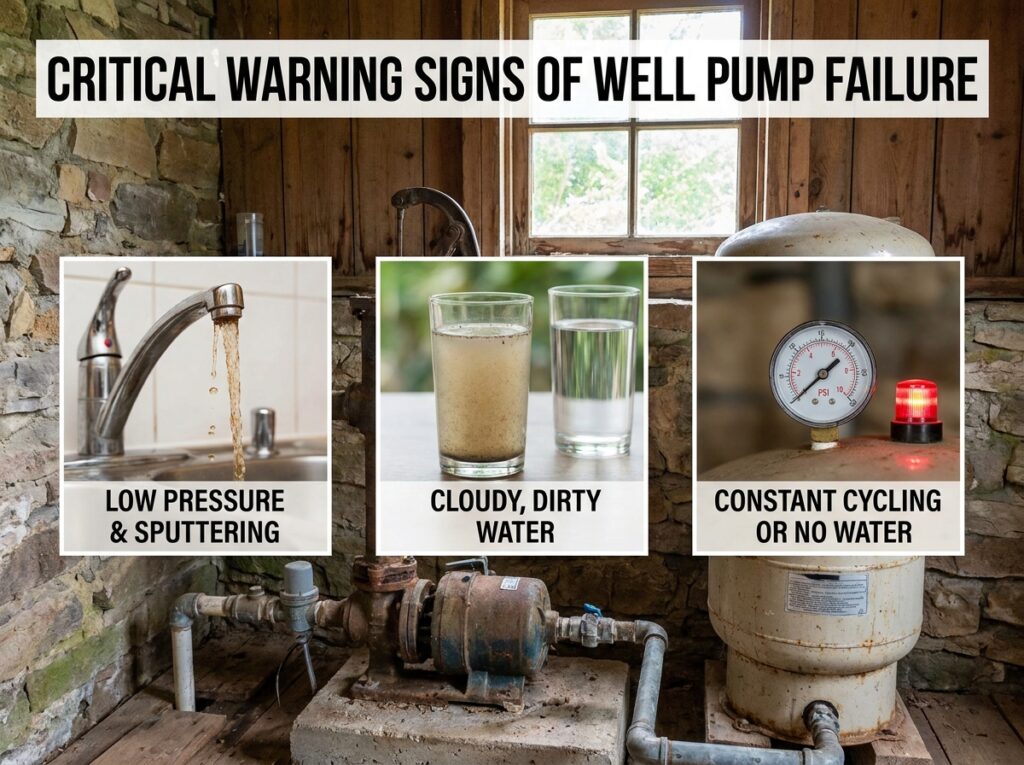
Critical Warning Signs of Well Pump Failure
Water Pressure and Flow Problems
Fluctuating water pressure represents one of the most common signs your well pump needs replacement. Homeowners experiencing water pressure issues typically notice inconsistent water pressure throughout the day, with PSI readings dropping below the standard 40-60 range. Low water pressure from well pump systems indicates either pump performance decline or pressure tank failure.
Intermittent water supply or sporadic water supply occurs when the pump motor struggles to maintain adequate flow measured in gallons per minute. Sputtering water from faucets well pump systems produce suggests air in water lines, which happens when the water table drops below the pump intake or when the foot valve fails. Complete water supply interruption, where no water comes from well fixtures, signals severe pump malfunction or motor burnout.
Unusual Sounds and Mechanical Noises
A well pump making grinding noise indicates bearing wear or sediment buildup around the impeller. Grinding sounds typically signal mechanical breakdown occurring within the pump housing, requiring immediate diagnostic testing by a plumber specializing in well systems. A well pump making clicking noise points to relay switch or pressure switch problems, particularly when the pump cycles frequently without building adequate pressure.
Constant humming from the control box suggests capacitor failure signs or electrical malfunction in the motor winding. These unusual noises differ significantly from the normal operational sounds of a healthy submersible pump or jet pump, making them reliable failure indicators.
Water Quality Changes
Dirty water from well pump systems containing visible sediment signals seal failure, allowing minerals and sediment to enter the water supply. Sandy water from well indicates the pump running dry due to insufficient water supply in the aquifer or problems with the well casing sanitary seal. Cloudy water well pump problem often correlates with pump stress causing increased sediment disturbance.
Discolored water ranging from brown to reddish hues suggests iron bacteria growth or sediment filter failure. Metallic taste water well pump delivers may indicate bearing deterioration releasing metal particles. Sulfur smell from well water or rotten egg odor typically results from bacteria buildup, though it can worsen when pumps malfunction and disturb stagnant water zones.
Electrical and Operational Issues
A well pump trips breaker repeatedly due to motor problems drawing excessive amperage beyond the circuit breaker rating. High electric bill from well pump operation signals reduced pump efficiency, with overworked pumps consuming 50-70% more voltage than properly functioning units (Department of Energy, 2024). Energy usage spike correlates directly with pump fatigue and component wear.
Well pump constantly running without stopping indicates pressure switch adjustment needs or a waterlogged pressure tank bladder. Well pump short cycling problem, where the system starts then stops immediately, points to faulty well pump control mechanisms or electrical problems in the relay switch. A well pump won’t shut off scenario creates risk of pump overheating and premature pump failure.
How Well Pump Systems Operate
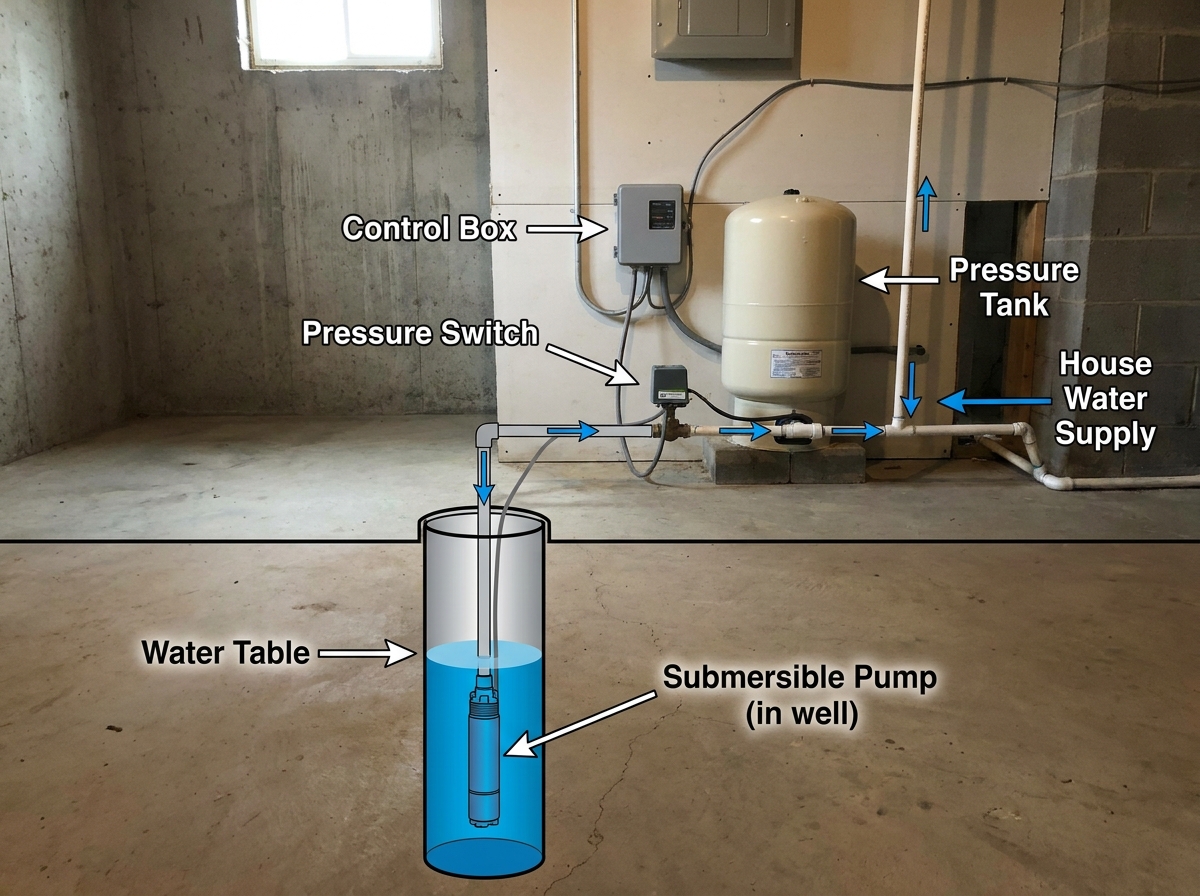
Understanding well system function helps identify when components fail. Submersible pumps installed in deep well applications (typically over 25 feet) push water upward through drop pipe connected to the pressure tank. The pump motor drives the impeller, creating pressure that forces water through check valves preventing backflow.
Jet pumps serve shallow well applications, using suction to draw water. Single-drop jet pumps work for wells under 25 feet, while two-pipe systems handle depths to 110 feet. Both pump types rely on the pressure tank to maintain system pressure between pump cycles, with the pressure switch activating the motor when PSI drops below the cut-in point.
The control box regulates power supply to submersible pump motors, managing voltage and protecting against electrical malfunction. A torque arrestor prevents the motor from spinning inside the well casing, while the pitless adapter provides sanitary connection outside the well cap. These signs of a failing well pump often trace back to specific component deterioration within this interconnected system.
Common Misconceptions About Well Pump Failure
Myth: Well pumps last indefinitely with minimal well maintenance.
Reality: Average lifespan of well pump systems ranges from 8-15 years for submersible pumps and 10-20 years for jet pumps, depending on water quality, pump capacity matching, and usage patterns (Water Systems Council, 2024).
Myth: Any pump problems require immediate complete pump replacement.
Reality: Many symptoms of pump failure respond to pump repair through seal kit installation, bearing replacement, capacitor replacement, or pressure tank bladder replacement, making well pump replacement vs repair decisions case-specific.
Myth: Low water pressure always means the pump is dying.
Reality: Water flow problems can result from clogged sediment filter, waterlogged pressure tank, incorrect pressure switch adjustment, or reduced aquifer levels rather than actual pump deterioration.
Normal Operation vs. Failing Well Pump
| System Aspect | Normal Operation | Failing Pump Symptoms |
|---|---|---|
| Water Pressure | Consistent 40-60 PSI | Fluctuating pressure, drops below 30 PSI, pressure loss during use |
| Pump Cycling | Runs 1-2 minutes per cycle, 3-5 times per hour during heavy use | Short cycling every 30 seconds, constantly running, won’t turn on |
| Water Quality | Clear, odorless, consistent temperature | Sediment in water, discolored water, air in water lines, unusual odors |
| Sound Profile | Quiet hum during operation | Grinding sounds, clicking sounds, loud vibrations, motor strain |
| Energy Usage | Stable power consumption matching horsepower rating | High electric bills, frequent tripped breaker, power consumption spikes |
Professional Diagnosis and Troubleshooting
When homeowners notice early warning signs of well pump failure, well pump troubleshooting begins with pressure gauge readings and electrical panel inspection. A qualified well technician performs diagnostic testing including amperage draw measurement, pump capacity evaluation, and pressure tank assessment.
How to test well pump pressure involves monitoring pressure switch cut-in and cut-out points, typically 40 PSI and 60 PSI respectively. Deviations indicate switch malfunction or tank problems. Testing the control box and capacitor requires specialized equipment measuring voltage under load conditions.
Well pump diagnostic test procedures identify whether issues stem from the pump installation depth, inadequate pump capacity for household demand, or actual mechanical breakdown. Professional evaluation determines cost to replace failing well pump versus targeted component repair, considering factors like pump age, extent of damage, and system efficiency.
When Immediate Action Becomes Necessary
Certain symptoms of a bad well pump demand urgent professional intervention. Complete loss of water supply, well pump won’t turn on conditions, burning smells from the electrical panel, or well pump overheating causes risk of motor burnout and potential electrical fire hazards. These defective pump scenarios require immediate shutdown and well contractor assessment.
Homeowners asking “how do I know if my well pump is going bad” should recognize that multiple simultaneous symptoms indicate advanced pump wear and tear. A pump breakdown typically doesn’t occur suddenly—recognizing failure indicators during early stages prevents water delivery problems and reduces overall well system failure costs.
Regular pump maintenance and annual inspections by certified professionals extend pump lifespan and identify minor issues before they escalate into major system failure requiring complete pump installation.