 24 X 7 online support
  Contact Us Free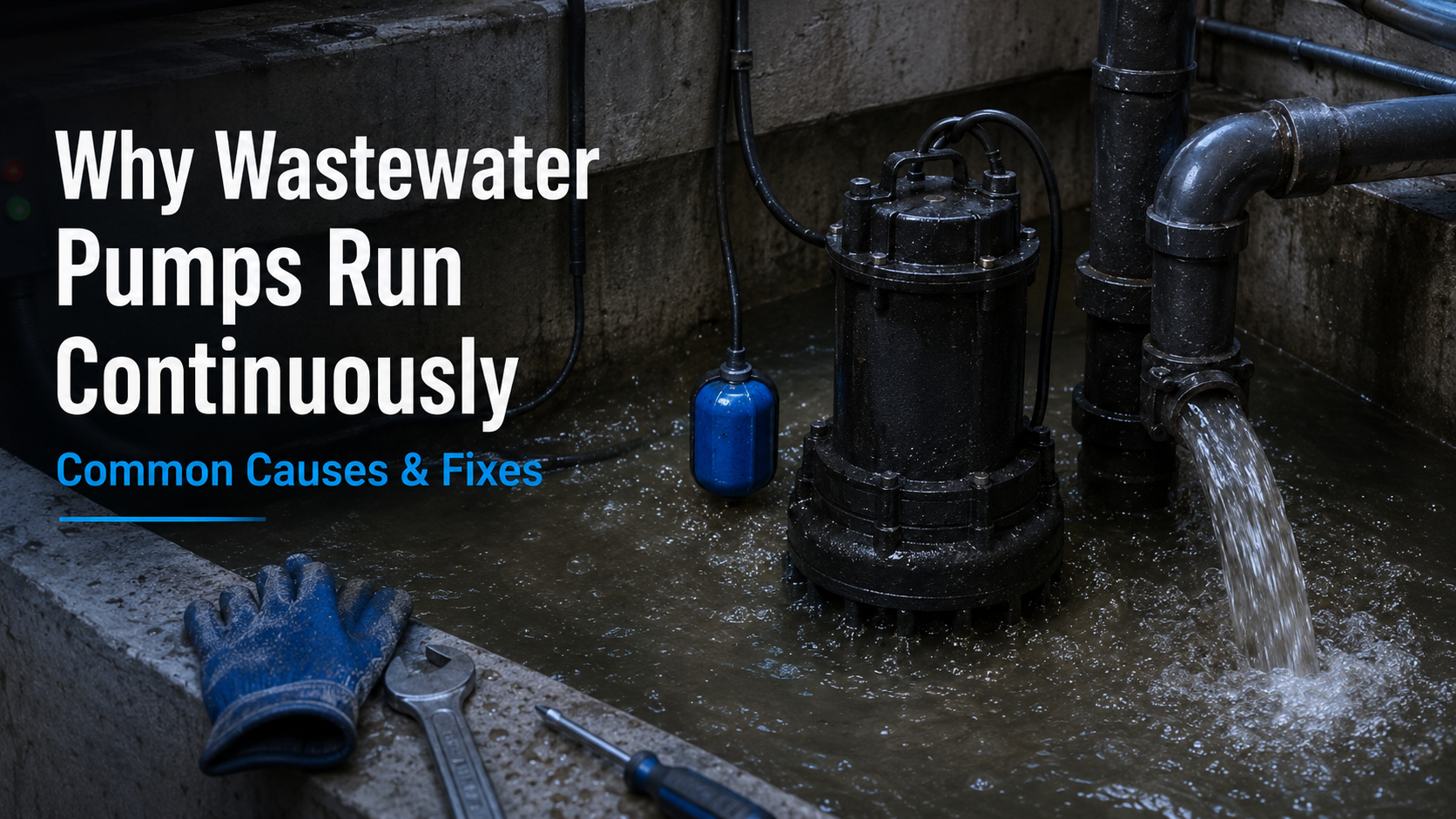
Why Does My Wastewater Pump Run Continuously? 5 Solutions That Work
A wastewater pump that runs nonstop indicates a system malfunction requiring immediate attention. According to the EPA, continuous pump operation increases energy consumption by 300-500% and accelerates motor failure. This troubleshooting guide provides diagnostic criteria and ordered solutions from most common to rare causes.
You’re Experiencing This Problem If…

Your sewage pump exhibits continuous pump operation when it shows these symptoms: the pump motor runs 24/7 without shutting off, you hear constant pump noise from the sump basin or pump pit, your utility bills increase unexpectedly due to excessive energy consumption, or the pump cycles on and off rapidly (short cycling) every few minutes. Unlike normal pump cycling that occurs 2-4 times daily in residential wastewater systems, a pump that won’t shut off operates constantly regardless of actual water level in the sewage basin.
Immediate risks include pump burnout from motor overheating, bearing damage, seal failure, and complete system failure within 48-72 hours of continuous operation. Commercial wastewater systems face additional risks of sewage backup affecting multiple units or facilities.
Quick Solution: Check Your Float Switch First
The float switch accounts for 60-70% of wastewater pump malfunction cases involving continuous running, according to pump manufacturers. This water level sensor controls automatic shutoff when water reaches the low water shutoff point.
Immediate diagnostic steps: Turn off power supply at the circuit breaker, visually inspect the float arm stuck in the “up” position, check for debris accumulation around the float, and manually move the float up and down to test movement. A stuck float switch prevents the pump control panel from receiving the shutoff signal, causing the sewage pump won’t stop running condition.
If the float moves freely, reconnect power and observe one pump cycle. The float should rise with increasing water level, trigger pump activation, then fall as water drains, signaling automatic pump shutoff at the designated low water level.
Why Does a Wastewater Pump Keep Running? 5 Primary Causes

1. Float Switch Failure (60-70% of Cases)
A faulty float switch represents the most common reason wastewater pump keeps running. The float mechanism uses a buoyant arm or ball connected to a relay switch that completes or breaks the electrical circuit. Failure modes include: float arm stuck in the upward position due to debris, damaged float causing incorrect buoyancy, corroded switch contacts preventing signal transmission, or broken mounting hardware allowing improper float positioning.
Testing methods include manual float manipulation with power disconnected, continuity testing with a multimeter, and observing float movement during controlled water level changes. Switch replacement typically costs $50-150 for residential systems and requires basic electrical knowledge.
2. Check Valve Leak or Backflow Issues
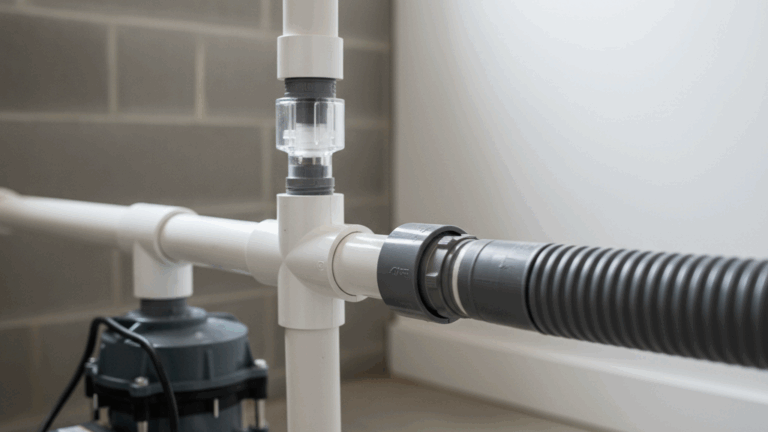
A broken check valve or leaking check valve allows treated wastewater to flow backward through the discharge pipe into the sump pit after the pump shuts off. This backflow issues creates a continuous cycle: pump drains basin → check valve fails to seal → water returns → pump restarts immediately. The wastewater pump keeps cycling on and off in intervals of 1-3 minutes rather than the normal 15-30 minute cycles.
According to plumbing system standards, check valves should prevent 100% backflow. A check valve not sealing properly loses 10-50% discharge capacity to reverse flow. Diagnosis involves listening for water hammer sounds (loud banging) when the pump stops or observing water level rising immediately after pump shutoff without new inflow.
3. Excessive Water Inflow from High Water Table
Groundwater infiltration occurs when the high water table exceeds the pump pit elevation, causing continuous water entry that exceeds pump capacity. This condition is common in coastal areas, flood zones, or during heavy rainfall periods. The pump works continuously but cannot reduce water level below the groundwater source elevation.
Foundation leak or underground leak issues compound the problem by allowing additional water entry through cracks, joints, or improper sealing. Professional assessment using flow rate measurements can determine if inflow exceeds the pump’s discharge capacity (typically 30-50 gallons per minute for residential wastewater systems).
4. Electrical Issues and Control Panel Problems
Faulty wiring, relay problems, or malfunctioning pressure switch components prevent proper pump control. An electrical short bypasses the float switch signal, keeping the relay switch continuously engaged. The thermal overload protection may fail, allowing the motor to run beyond safe operating temperatures.
Diagnosis requires testing voltage at the pump controller with a multimeter, inspecting for burnt wiring connections, checking the capacitor for bulging or leakage, and verifying proper relay switch operation. Tripped breaker or blown fuse conditions indicate overload situations that require immediate professional service to prevent fire hazards.
5. Insufficient Pump Capacity (Undersized Pump)
An undersized pump cannot match the flow rate of incoming wastewater, causing pump overworking and continuous operation during peak usage periods. Proper sizing requires calculating total dynamic head, expected flow rates, and peak demand periods. According to local building codes, residential sewage pumps should handle 2-3 times average daily flow.
A submersible pump rated at 30 gallons per minute struggles in applications requiring 40-50 GPM capacity. The pump runs nonstop attempting to manage excessive demand, leading to reduced performance and accelerated component wear.
Solution #1: Inspect and Repair Float Switch
How to fix stuck float switch on wastewater pump:
- Disconnect power at circuit breaker and verify zero voltage with a multimeter
- Remove pump cover or access panel to expose float mechanism
- Clear debris accumulation from float arm, guide rod, and surrounding basin area
- Test float movement manually – it should move freely through full range of motion
- Inspect mounting bracket for damage or misalignment
- Adjust float switch position so activation occurs at proper high water level (typically 6-8 inches below rim) and deactivation at low water shutoff point (2-3 inches above pump intake)
- Replace float switch if mechanical damage, corrosion, or electrical continuity testing reveals failure
Float adjustment procedures vary by pump type. Vertical float switches use threaded rods for height adjustment, while tethered floats require cord length modification. Refer to pump specifications from the pump manufacturer for model-specific procedures.
Solution #2: Test and Replace Check Valve
Check valve replacement wastewater pump procedure addresses backflow preventer failure:
- Locate check valve on discharge line (typically 12-24 inches above pump)
- Mark water level in basin with permanent marker
- Run pump cycle and observe if water level rises immediately after shutoff (indicates valve leak)
- Listen for water hammer or reverse flow sounds
- Disconnect discharge pipe sections to access valve
- Inspect valve flapper or swing disc for debris, corrosion, or damage
- Replace entire check valve assembly if cleaning doesn’t restore proper sealing
- Install new valve with arrow indicating correct flow direction
Quality check valves cost $30-80 and prevent 95-100% backflow when properly installed. Spring-loaded check valves provide superior performance in wastewater pump applications compared to swing check designs.
Solution #3: Diagnose Electrical System Problems
Wastewater pump electrical problems diagnosis requires systematic testing:
Control Panel Testing: Verify 120V or 240V power supply (depending on system voltage) at control panel terminals. Test relay switch operation by manually triggering float switch and observing relay click and voltage change at pump motor terminals.
Wiring Inspection: Examine all electrical wiring for damaged insulation, loose connections, corrosion at terminals, or burn marks indicating overheating. Replace damaged wiring using appropriate gauge wire (typically 12 AWG for 120V systems, 10 AWG for 240V).
Component Testing: Test capacitor with capacitance meter (typical range 15-50 microfarads for residential pumps). Inspect thermal overload switch for proper trip settings. Verify pressure switch calibration if equipped with pressure tank.
Professional electrician services cost $150-300 for troubleshoot wastewater pump control panel issues but prevent fire hazards and ensure code compliance.
Solution #4: Evaluate Pump Capacity and Sizing
How to size wastewater pump correctly involves these calculations:
Flow Rate Requirements: Measure actual inflow by timing how long it takes to fill the sump basin by a known volume (e.g., 10 gallons). Multiply by cycles per hour to determine gallons per hour demand. Compare to pump discharge capacity listed in pump specifications.
Total Dynamic Head: Calculate vertical lift (floor to discharge point) plus friction losses from pipe runs, elbows, and check valve. Each 90-degree elbow adds equivalent of 5 feet head. A properly sized effluent pump handles calculated head with 20-30% capacity margin.
Replace wastewater pump if current capacity falls below 150% of measured demand. An oversized pump causes short cycling but prevents continuous operation issues. Consult Pump Professionals for accurate pump capacity evaluation and replacement recommendations.
Solution #5: Address Water Infiltration Sources
Excessive groundwater causing pump to run constantly requires source identification:
High Water Table Management: Install drainage system improvements including perimeter drains, sump pump backup systems, or exterior waterproofing. In areas with seasonal high water table, a grinder pump with higher capacity (50-70 GPM) may be necessary during peak periods.
Leak Detection: Inspect foundation for cracks, check pipe blockage at sewer connections, examine basement walls for moisture penetration, and verify proper grading around building perimeter. Repair basement wastewater pump running constantly issues often require addressing multiple water entry points simultaneously.
System Capacity Upgrades: Install backup pump systems, upgrade to higher capacity submersible pump models, or add alarm system components to alert of abnormal water levels before continuous operation begins.
Advanced Troubleshooting: Mechanical Component Failure
Impeller Damage and Clogged Impeller Issues
Clean clogged wastewater pump impeller by removing pump from basin (for serviceable models), disassembling impeller housing, and clearing debris accumulation. Symptoms include reduced performance, abnormal sounds, and vibration issues during operation. Replace worn wastewater pump components including impeller if vanes show erosion or damage.
Motor and Bearing Assembly Problems
Motor failure presents as humming without rotation, excessive motor overheating (surface temperature exceeding 150°F), or bearing damage causing grinding noises. Pump motor replacement costs $200-600 depending on horsepower rating (typically 1/3 to 1 HP for residential applications). Bearing assembly repair requires specialized tools and is typically performed during professional service.
Seal Failure and Pump Seal Degradation
Oil or water mixing in pump housing indicates pump seal compromise. This mechanical failure allows water intrusion into motor compartment, causing electrical shorts and immediate shutdown risk. Seal replacement during preventive maintenance (every 3-5 years) prevents catastrophic motor damage.
Preventive Maintenance to Stop Continuous Running
Prevent wastewater pump failure through scheduled inspection procedures:
| Frequency | Maintenance Task | Prevents |
|---|---|---|
| Monthly | Test float switch movement and clean debris | Float arm stuck conditions |
| Quarterly | Inspect check valve operation and clean | Backflow and short cycling |
| Semi-annually | Test alarm system, verify discharge line integrity | System failure and pipe blockage |
| Annually | Professional pump inspection, lubricate bearing assembly | Motor failure and component wear |
Wastewater pump maintenance prevent continuous running programs cost $150-300 annually but extend pump lifespan from 5-7 years to 10-15 years according to pump station operators.
When to Call Professional Service
Contact licensed plumber or HVAC technician for these scenarios:
- Electrical issues involving municipal wastewater system connections or lift station components
- Repair costs exceeding 50% of pump replacement value
- Warranty coverage questions requiring pump manufacturer consultation
- Commercial wastewater applications or lift station pump running continuously situations
- Complex diagnostics requiring specialized testing equipment
- Emergency wastewater pump repair continuous running with sewage backup risk
Professional assessment determines if repair or complete system replacement provides better long-term value. Cost to repair continuously running wastewater pump ranges $200-800 depending on root cause, while full pump replacement costs $600-2,000 including installation labor.
Summary: Solving Continuous Pump Operation
A wastewater pump running constantly troubleshooting approach should follow this priority: inspect float switch (60-70% of cases), test check valve sealing, verify electrical system operation, evaluate pump capacity against demand, and assess water infiltration sources. Most residential wastewater pump issues resolve through float switch adjustment or check valve replacement, both achievable as DIY fixes with basic tools.
Prevention through regular testing methods and maintenance schedules prevents 80-90% of continuous operation failures. Install wastewater pump backup system installation components and maintain proper documentation of pump installation specifications for future reference during system diagnosis requirements.