 24 X 7 online support
  Contact Us Free
Submersible vs. Dry-Pit Wastewater Pumps: Which Is Right for Your Application? 2025
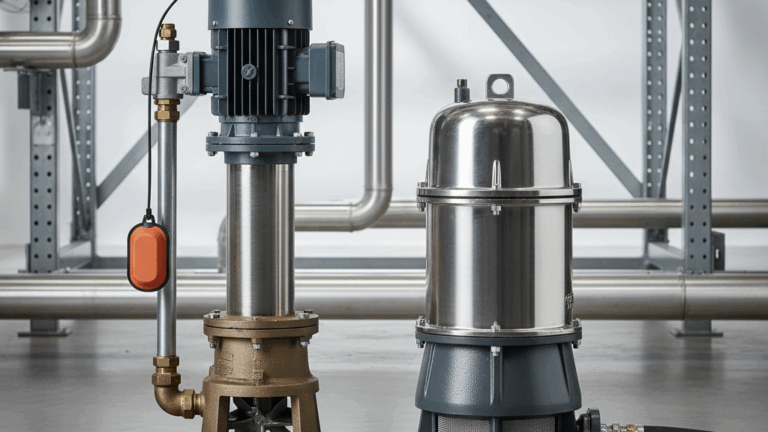
Submersible wastewater pumps install directly in wet wells and offer lower installation costs and space savings, whereas dry-pit pumps mount above the liquid level in separate dry wells, providing superior maintenance access and longer service life. According to industry data from municipal wastewater treatment facilities (2024), submersible pumps reduce initial capital expenditure by 30-40% compared to dry-pit installations, while dry-pit pumps deliver 15-20% lower total cost of ownership over 20-year lifecycles in large pump stations exceeding 500 gallons per minute (GPM) flow rate.
Understanding Wastewater Pumping Systems: Core Differences
Wastewater pumping systems use two fundamental configurations for sewage handling equipment. Submersible pumps operate fully submerged within the wet well, with the motor and impeller assembly sealed together in water-tight pump housing. The motor cooling system relies on the surrounding liquid waste for heat dissipation, utilizing specialized stator windings and rotor assembly designed for continuous submersion.
In contrast, dry-pit pumps feature above-ground installation in a separate dry well chamber adjacent to the wet well. The pump and motor remain accessible in a ventilated pump room, connected to the wastewater collection system through suction piping that extends below the liquid level. This pump station design requires substantial drywell construction with adequate pump room ventilation and explosion-proof motors in certain applications.
Quick Comparison: Submersible vs. Dry-Pit Wastewater Pumps
| Feature | Submersible Pumps | Dry-Pit Pumps |
|---|---|---|
| Installation Location | Below-ground installation in wet well | Above-ground installation in dry well |
| Maintenance Access | Requires pump removal via guide rail system | In-situ maintenance with direct access |
| Capital Costs | $8,000-$25,000 per pump (100-500 GPM) | $15,000-$45,000 per pump (100-500 GPM) |
| Space Requirements | Minimal surface footprint | Requires dedicated pump pit design |
| Motor Configuration | Oil-filled motor or water-cooled motor | Air-cooled with standard thermal overload protection |
| Service Access | Chain hoist or overhead crane required | Direct access via service platform |
| Energy Efficiency | 85-89% typical pump efficiency | 87-92% typical hydraulic performance |
| Odor Control | Submersible pump confined space elimination | Requires dry-pit pump room odor management |
How Do Installation Costs Compare Between Submersible and Dry-Pit Pumps?
Submersible pump installation costs average 30-40% lower than dry-pit configurations for municipal infrastructure projects under 500 GPM capacity. According to construction data from 2024, a typical submersible installation in lift stations requires only wet well construction with guide rail installation and auto-coupling system components. The total capital expenditure ranges from $35,000-$75,000 for a complete two-pump alternating pump operation system.
Dry-pit installations demand both wetwell construction and substantial drywell construction, including foundation design requirements, pump mounting options (floor mounted pump or suspended pump installation), ventilation system design, and hoist system infrastructure. These additional requirements increase initial investment to $65,000-$140,000 for comparable capacity. However, dry-pit systems offset higher upfront costs through reduced operating expenditure over time.
The wet well depth for submersible installations typically measures 12-20 feet, optimized for NPSH requirements and solids handling capacity. Dry-pit pump dry well construction costs add $25,000-$50,000 to project budgets, requiring waterproofing, dehumidification, and electrical safety systems rated IP68 for pump controls automation equipment.
Construction and Space Considerations
Submersible pump space saving benefits prove significant in urban environments where land costs exceed $50 per square foot. A submersible pump station occupies 150-300 square feet, whereas dry-pit pump installation considerations demand 400-800 square feet to accommodate the pump basin, dry well chamber, and maintenance pit access.
Pump sump configuration for submersible systems follows simplified hydraulic model requirements, eliminating complex suction piping geometry that creates friction losses in dry-pit designs. The sump design incorporates bell-mouth inlets positioned 6-12 inches above the wet well floor, preventing vortex formation and air entrainment that degrades performance.
What Are the Maintenance Requirements for Each Pump Type?
Maintenance requirements for submersible wastewater pumps center on periodic inspection using pump removal procedures that extract the entire unit via the guide rail system. According to manufacturer support data, submersible sewage pumps require seal replacement every 3-5 years and bearing replacement every 5-8 years, depending on solids-laden fluids concentration and operational efficiency metrics.
The submersible pump removal and reinstallation process involves disconnecting electrical connections, raising the pump using chain hoist equipment, and transporting the unit to a workshop for seal water system inspection, impeller replacement, and wear ring clearance verification. This maintenance strategy incurs downtime of 4-8 hours per event, plus transportation and refurbishment costs averaging $2,500-$6,000 per overhaul.
In contrast, dry-pit pump in-place maintenance advantages allow technicians to perform seal replacement, coupling alignment procedures, and bearing replacement without removing the pump from its foundation. Maintenance requirements for dry-pit wastewater pumps include quarterly shaft alignment verification, semi-annual mechanical seal inspection, and annual pump performance testing. The dry-pit pump service access benefits enable 80% of routine maintenance tasks in situ, reducing service costs by 40-50% compared to submersible units.
Accessibility and Service Logistics
Dry-pit pump accessibility advantages extend beyond routine maintenance to emergency pump failure prevention scenarios. Service personnel access the pump motor configuration, mechanical seals, and pump controller through standard doorways without confined space entry permits or specialized lifting equipment. The service platform provides ergonomic working conditions, whereas submersible pump service requires confined space safety protocols and overhead crane operation.
Component seal replacement on dry-pit pumps takes 2-4 hours with the pump in place, compared to 8-12 hours for submersible pump seal failure prevention procedures including extraction, seal replacement, and reinstallation. This accessibility reduces maintenance labor costs from $800-$1,200 per seal service to $200-$400 for dry-pit units.
Which Pump Type Offers Better Energy Efficiency and Operating Costs?
Submersible pump energy efficiency comparison reveals average efficiency ratings of 85-89% at the duty point, with performance degradation of 2-3% annually due to wear components deterioration in abrasive sewage applications. The submersible motor design incorporates cooling jacket technology that maintains optimal temperature, but the oil-filled motor configuration adds friction losses reducing overall system efficiency by 3-5 percentage points.
Dry-pit pumps achieve 87-92% pump efficiency at rated flow rate, maintained through periodic shaft alignment and impeller clearance adjustment. According to energy consumption analysis from large pump stations (2024), dry-pit configurations consume 8-12% less energy over 10-year operational periods when coupled with variable frequency drive (VFD) technology for performance optimization.
Operating costs for a 250 GPM submersible pump running 16 hours daily average $8,500-$11,000 annually in electricity at $0.12/kWh, plus $2,000-$3,500 in maintenance. Comparable dry-pit pump operating expenditure totals $7,800-$9,500 in energy costs and $1,200-$2,000 in maintenance, delivering $3,000-$5,000 annual savings that compound over the pump’s 15-25 year service life.
Total Cost of Ownership Analysis
Life cycle costs submersible wastewater pumps total $95,000-$165,000 over 20 years for 250 GPM capacity systems, including installation costs, energy consumption, maintenance, and pump refurbishment at year 12. Life cycle costs dry-pit wastewater pumps range from $105,000-$145,000 for identical capacity and duty cycle, with the crossover point occurring at year 6-8 where accumulated energy savings offset higher initial capital expenditure.
For pump stations exceeding 500 GPM or requiring 24/7 operation, dry-pit systems deliver superior total cost of ownership through extended service life (25-30 years versus 15-20 years), reduced energy consumption, and lower maintenance expenses. Submersible configurations prove more economical for smaller lift stations with intermittent operation (4-8 hours daily) where installation costs dominate lifecycle economics.
Use-Case Scenarios: When to Choose Each Pump Type
Best Pump Type for Municipal Wastewater Applications
Municipal wastewater treatment facilities with flow rates under 500 GPM benefit from submersible pump applications in lift stations due to reduced footprint, simplified wet well design requirements, and lower capital budgets. According to Pump Pros, municipalities operating 15+ small lift stations achieve 35% lower system-wide installation costs using submersible configurations, with centralized maintenance facilities handling pump overhaul procedures.
When to use dry-pit wastewater pumps becomes evident in regional pump stations serving populations exceeding 25,000 where flow characteristics demand 750-5,000 GPM capacity. These large pump stations justify dry-pit pump foundation design requirements through superior reliability in sewage applications and reduced pump troubleshooting incidents (30% fewer emergency calls compared to submersible installations according to 2024 industry surveys).
Best Pump Type for Industrial Wastewater
Industrial wastewater containing high concentrations of abrasives, chemicals, or temperature extremes (140-180°F) favors dry-pit configurations with specialized corrosion resistance and pump wear components accessible for rapid replacement. The dry-pit pump motor protection requirements allow specification of premium mechanical seal types (cartridge seal or double seal configurations) with seal flush plan systems that extend seal life 3-5x compared to standard submersible pump seal failure rates.
When to use submersible wastewater pumps in industrial settings includes food processing effluent, textile wastewater, and other applications with moderate solids handling requirements (up to 3-inch sphere passage) where submersible pump odor control advantages eliminate worker exposure to hazardous atmospheres. The submersible pump confined space elimination benefit proves critical in facilities where dry-pit pump ventilation requirements would demand costly explosion-proof ventilation systems.
Space-Constrained and Retrofit Applications
Submersible pump retrofit solutions dominate urban redevelopment projects where available real estate limits pump station design options. A retrofit project replacing aging sewage lift station infrastructure with submersible technology reduces site footprint by 60-75%, eliminating the need for dry well chambers and pump room structures. The guide rail system installation mounts to existing wet well walls, with auto-coupling system benefits enabling pump exchange without entering the wet well.
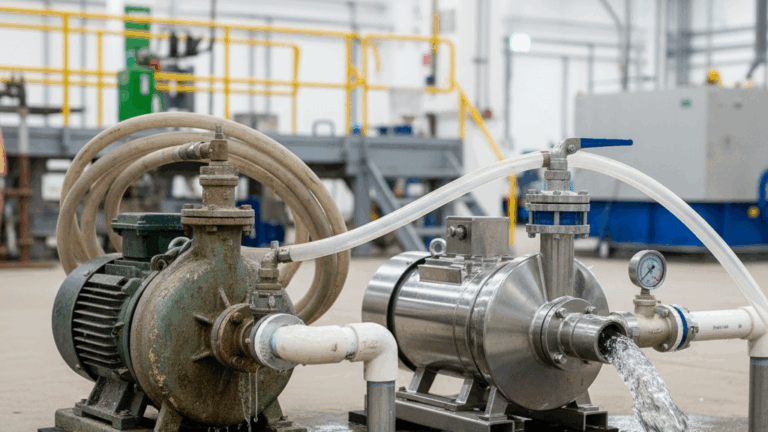
Pump retrofit solutions using dry-pit technology suit facilities upgrading from older submersible installations to gain maintenance accessibility. Converting a 500 GPM submersible station to dry-pit configuration costs $85,000-$150,000 including drywell construction, but delivers payback in 7-10 years through reduced maintenance labor and extended component life.
Decision Framework: Selecting the Right Wastewater Pump Type
Choose submersible wastewater pumps if:
- Flow rate requirements range from 50-500 GPM with total dynamic head under 100 feet
- Available land area restricts above-ground installation footprint to under 300 square feet
- Capital expenditure budgets limit initial investment to under $75,000 per dual-pump system
- Operational schedule involves intermittent pumping (4-12 hours daily) rather than continuous operation
- Odor control and submersible pump odor control advantages eliminate the need for ventilation infrastructure
- Centralized maintenance facilities can handle pump removal and refurbishment efficiently
Choose dry-pit wastewater pumps if:
- Flow characteristics exceed 500 GPM or require pump curves optimized for variable demand patterns
- Total cost of ownership over 20+ years justifies higher initial capital investment
- Maintenance strategy prioritizes in-situ service with minimal downtime for critical infrastructure
- Pump performance guarantee requirements demand accessibility for hydraulic calculations verification and testing
- System head loss analysis indicates pressure requirements exceeding 125 feet total dynamic head
- Best practices for dry-pit wastewater pump selection align with facility standards for vertical turbine pump or horizontal split case pump technologies
Pump Sizing Methodology and Specification
Pump selection software analyzing pipe network design, static head, dynamic head, and friction losses determines the optimal duty point for either configuration. Best practices for submersible wastewater pump selection specify 15-20% capacity margin above peak flow projections, accounting for pump performance degradation over time. Bid specifications should define minimum pump efficiency (87% for dry-pit, 84% for submersible), mechanical seal types, ingress protection rating (IP68 for submersible motors), and performance guarantee requirements.
Contractor proposals must detail manufacturer support capabilities, service network coverage, replacement parts availability, and warranty terms (minimum 2 years parts, 1 year labor). The specification should mandate pump performance testing at the factory or certified third-party facility, documenting flow characteristics across 50-120% of rated capacity to verify compliance with hydraulic model predictions and system design requirements.